COMMEET
Rohingyatographer: Refugee’s activism in Kutupalong Refugee Camp in Cox’s Bazar, Bangladesh
Who am I and what have I done?
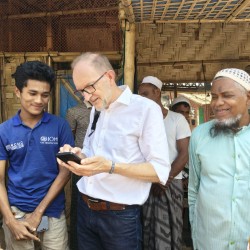
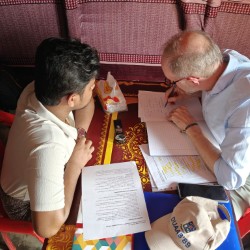
My name is Sigfried Janzing, a COMMEET Fellow from the early days. I have a background in history and heritage, and to devote myself to heritage in areas of conflict, I took early retirement from my job as director of an archival institution in the Netherlands in 2022. I have been active for the dispossessed Rohingya refugees in Bangladesh ever since, currently doing research with them in the Kutupalong refugee camps in Cox’s Bazar district by analysing statelessness through Rohingya photography. I collaborate with a team of 15 young photographers of the Rohingyatographer collective. Involvement in the development of the Migrants Toolkit for COMMEET under Ros Wade was certainly an inspiration to opt for this research.
COMMEET
What is the gruesome context?
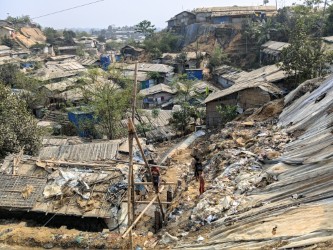
Rohingya refugees are a stateless community, expelled from their homeland Arakan in northwest Myanmar by the Myanmar military regime. The displaced Rohingya are living in Bangladesh, Indonesia, Malaysia, Pakistan, Thailand and Saudi Arabia, to mention just the countries with the biggest communities. With 1,200,000 Rohingya inside its borders, Bangladesh carries the biggest burden. After four consecutive waves (1977, 1992, 2012 and 2017), they are now living in 34 refugee camps in Cox´s Bazar District in southeast Bangladesh. Perspectives for the community are grim and worsening due to the political stalemate between Myanmar on the one hand, calling the Rohingya ´Bengalis´ and not by their name, thus expropriating them in the homeland to prevent their return, and Bangladesh on the other hand, calling the Rohingya by the political fabrication ´Forcibly Displaced Myanmar Nationals´ (FDMN) with the policy objective of repatriation. What about the rest of the world? It remains largely silent, making the Rohingya an example of a ´forgotten people´.
Photography as an empowerment tool
Since 2020 Rohingya youths have used smartphone photography to document daily life in the camps, asserting a visual presence against systemic erasure. They act as a collective called Rohingyatographer, which promotes a system of inclusive storytelling and co-authorship rather than a mere repository of images. However, due to a life in limbo their visual record remains precarious as a source of knowledge and requires support.
I conducted a masterclass about Ariella Azoulay’s the Civil Contract of Photography as part of a 30-week course about human rights and visual storytelling conducted online, led by co-founder of Rohingyatographer David Palazón exclusively for Rohingya participants.
The masterclass evaluated how the photograph functions as a civic, ethical and social bond between the photographer, the portrayed and the spectator, making all of them equals. Moving beyond the humanitarian gaze, so beyond feeling sadness or pity when seeing suffering, we focused instead on the need to use images to demand action, namely justice and human rights. Viewers have a duty to see the person in the photo as an equal person, not as a helpless victim. Finally, we explored how we could curate a “visual guide” of narratives for community agency and empowerment.
What have been the challenges and opportunities?
The daily practicalities of statelessness in the camps clearly show many challenges, ranging from restrictions and barriers imposed on them by authorities and limited access to education to living between memory and temporality, increased injustice for girls, and unofficial identity, to mention just a few. The photographers’ will to collaborate (=opportunity) and their stated concerns in a topic list for our dialogues (=challenge) are two sides of the same coin. How to find a balance between their will to cooperate and their embarrassment at being researched? Trust was founded at the beginning by sincerely recognising the Rohingya as sole knowledge holders of their own experiences, which normally is extracted from them as objects in interviews. Hence, all photo assignments were aimed at building their own so-called Topic Guide, moving away from the researcher´s agenda. The impact until now is not just sincere recognition but also raised self-esteem and visibility of the Rohingya, by sharing and embracing the research topic and methodologies, jointly establishing rules and jointly doing the planning. The chosen methodology can be compared with a ten-step community empowerment process, which can be further explored under the ‘Reports and Bulletins’ button on this site.
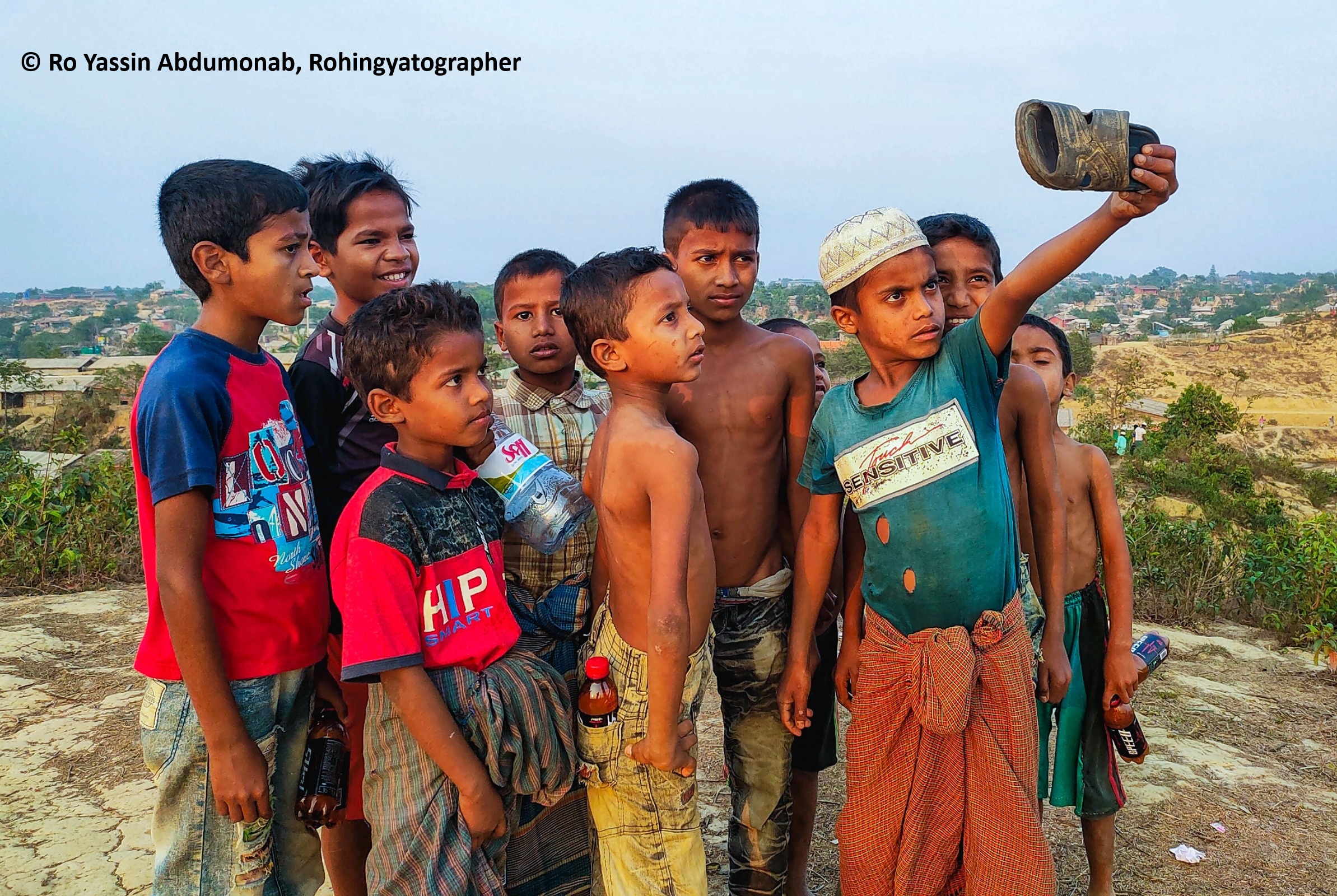
A group of children take a selfie using a sandal on a hilltop in Balukhali refuge camp, Bangladesh. 2022 © Ro Yassin Abdumonab / Rohingyatographer
COMMEET
What is next?
As long as the Rohingya refugees remain stuck in camps abroad, remain dispossessed and remain forgotten, we are not done. A concrete plan has been established for two online dialogues and two real-life dialogues, followed by a debriefing, and this process will be input for follow-up reporting here. Apart from this, we will pay attention to the plight of Rohingya refugees in webinars.
If you are interested in this specific Commeet project, or in the work that we are doing in the Rohingya refugee camps in Bangladesh, trying to save them from oblivion, please get into a conversation with me. If you are interested in my 10-step toolkit based on The Civil Contract of Photography, please email me.
Sigfried Janzing, COMMEET Fellow
s.m.j.janzing@uva.nl